THE CARGOTRAVEL JOURNAL
A Practical Packing Checklist for a 7-Day Trip
By CargoTravel Editorial · October 26, 2026 · Practical planning guide
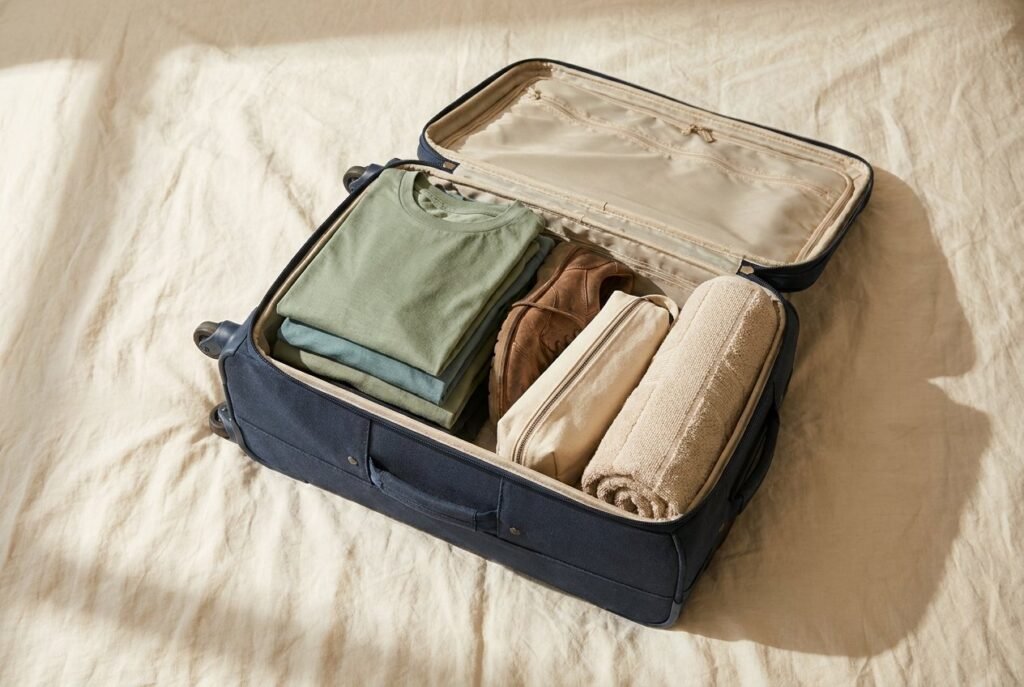
Packing for seven days does not necessarily mean bringing seven versions of everything. A better starting point is the trip you are actually taking: where you will sleep, what you will do, whether you can do laundry and what you are allowed to carry. The aim is a usable bag, not a perfect-looking checklist.
Start with the non-negotiable checks
Confirm your carrier’s baggage size and weight limits, including any separate rules for connecting services. Check restricted items and liquid rules with the relevant airport or airline. A packing generator cannot verify those rules for your booking.
Then consider the forecast, not just the destination’s general reputation. Cool evenings, rain, air conditioning and exposed activities may call for layers even when the daytime temperature sounds warm. Check again shortly before departure.
Build a small clothing system
For an ordinary week, choose clothes that mix together and suit the planned activities. A reasonable starting point could be four or five tops, two or three bottoms, underwear and socks for your laundry schedule, sleepwear and one adaptable layer. Adjust quantities for heat, exercise, modesty needs, work or access to washing facilities.
Wear the bulkiest practical shoes while traveling if that is comfortable. A second pair may be useful, but several pairs can take up a surprising share of the bag. Test shoes before the trip rather than discovering discomfort during a long walking day.
Use categories, then remove duplicates
- Documents: the identification and travel documents your journey actually requires, plus booking details you can access offline.
- Clothing: mix-and-match outfits, sleepwear, appropriate layers and footwear.
- Toiletries: essentials in suitable containers, with spill protection.
- Technology: phone, charger and compatible adapter if needed.
- Personal items: glasses, personal-care products and individually necessary supplies.
Agree who brings shared items. Two travelers may not need two large bottles of the same product, but do not assume you can share something another person depends on. Keep valuable or essential items according to carrier rules and your own needs.
Adapt for the activity, not the aesthetic
A beach day, business meeting and mountain walk ask for different equipment. Add the specific items each booked activity requires, then verify the operator’s instructions. For specialist outdoor activities, get a proper equipment and safety list from a qualified provider; a general travel checklist is not enough.
If you take medication or use medical equipment, plan with your clinician, carrier and relevant authorities. Requirements can depend on the medicine and destination. Keep necessary documentation and supplies accessible, but do not rely on a blog for medical or border advice.
Pack a small first-night set
Think through what you would need if you reached your accommodation late or your checked bag was delayed. A change of essentials, charging cable and the information needed to reach your stay can reduce unnecessary searching. What you carry and where you carry it must still follow security and airline rules.
Before closing the bag, lay everything out once. Remove repeated items, check pockets and test that you can comfortably lift or move the luggage. Leave some spare space rather than packing every available corner.
Turn the list into a working checklist
Use the Packing List Generator for a starting point based on your days, climate and activities. Remove irrelevant suggestions, add your personal items and tick things only after packing them. Download or print the checklist before leaving the page; it is not automatically saved.
Finally, check the forecast, charge devices and review the departure-day essentials. A short final check is usually more helpful than adding another speculative item. If your schedule is still changing, use the Itinerary Builder to see which activities your packing needs to support.